
What is Strabismus?
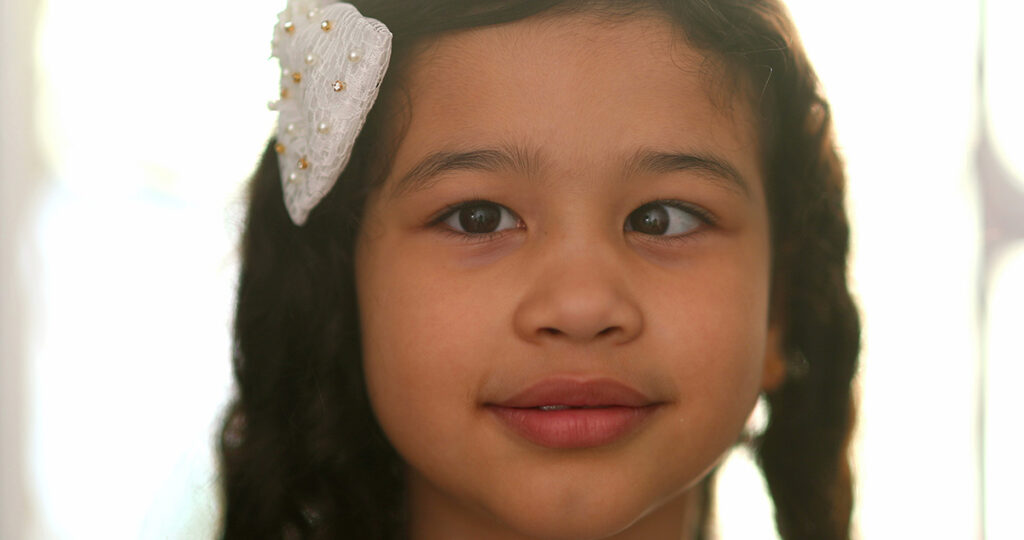
Strabismus is a condition where the eyes are misaligned. This may happen occasionally or may be constant. It is estimated up to 5% of children have strabismus and they will not grow out of it. While it is best to initiate treatment as soon as possible for an optimal visual outcome, strabismus in adults is still treatable.
Types of Strabismus
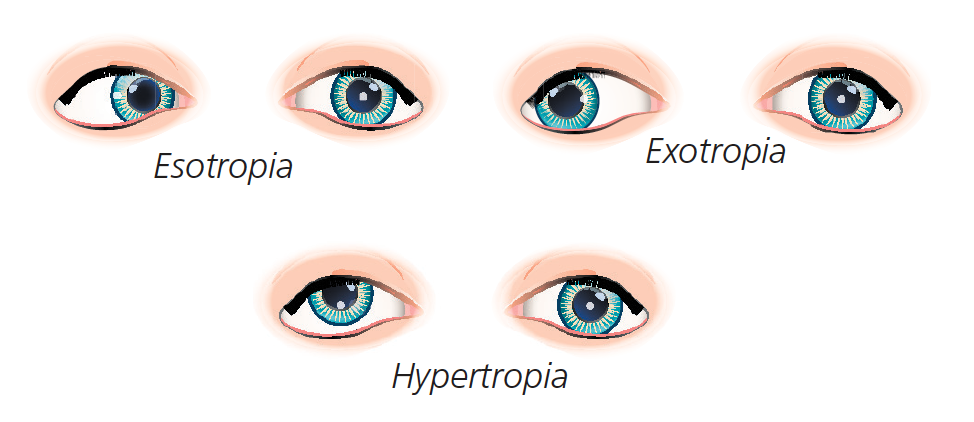
- Exotropia: an eye that turns out
- Esotropia: an eye that turns in
- Hypertropia: an eye that turns up
- Hypotropia: an eye that turns down
- Alternating: either eye may become misaligned
- Constant: one eye is constantly misaligned
- Intermittent: misalignment occurs only some of the time
Effects of strabismus if left untreated
- Loss of depth perception: Exact alignment of the two eyes is necessary to be able to appreciate depth. When only one eye is looking at an object, it is impossible to have true 3D vision.
- Diplopia (Double Vision): The eyes are looking at two different places and the brain is unable to combine the two images into one. This may lead to confusion, nausea, severe discomfort and disorientation.
- Suppression: The misalignment of the two eyes should cause double vision. One way the brain responds to this is by ignoring the input from the strabismic eye to avoid confusion.
- Amblyopia: Strabismic amblyopia may occur in children where the eye turn is left untreated. The brain learns to ignore the input from the turned eye to decrease confusion. When this occurs, visual development is compromised. Without treatment, this eye may never be to able achieve 20/20 vision even with glasses.
- Life & Social Implications: With strabismus, a person has an eye that does not align with the other. This misalignment is usually noticeable to the average person and can be troublesome, socially, to those with the condition. So, while strabismus causes problems in the classroom and on the job, it can cause further stress on a person’s confi dence because of negative social experiences. The earlier treatment is started, the sooner a person can move positively forward in school and in life.
Strabismus Treatment
Glasses or Contact Lenses
In some cases, misalignment of the eyes may simply be corrected with wearing the appropriate prescription lenses. This is usually the first step taken for any patient with strabismus. Contact lenses are benefi cial with certain prescriptions due to optical advantages. They may be used even in very young patients to give them the best possible vision. In many cases, it is common to still see the eye turn when glasses or contact lenses are removed.
Vision Therapy
A structured program of activities may be prescribed to improve visual abilities and acuity while decreasing suppression and frequency of the eye turn. Vision therapy trains the eyes and brain to work together more effectively and reinforces the connection to the strabismic eye.
Surgery
In some cases, the eyes are unable to align without surgical means. Vision therapy both before and after the eyes are surgically aligned improves surgical outcomes.
Studies have shown negative social implications for children and adults with visible strabismus. Treatment that successfully addresses the condition will also improve confidence, coordination, driving, learning, and sports performance.